

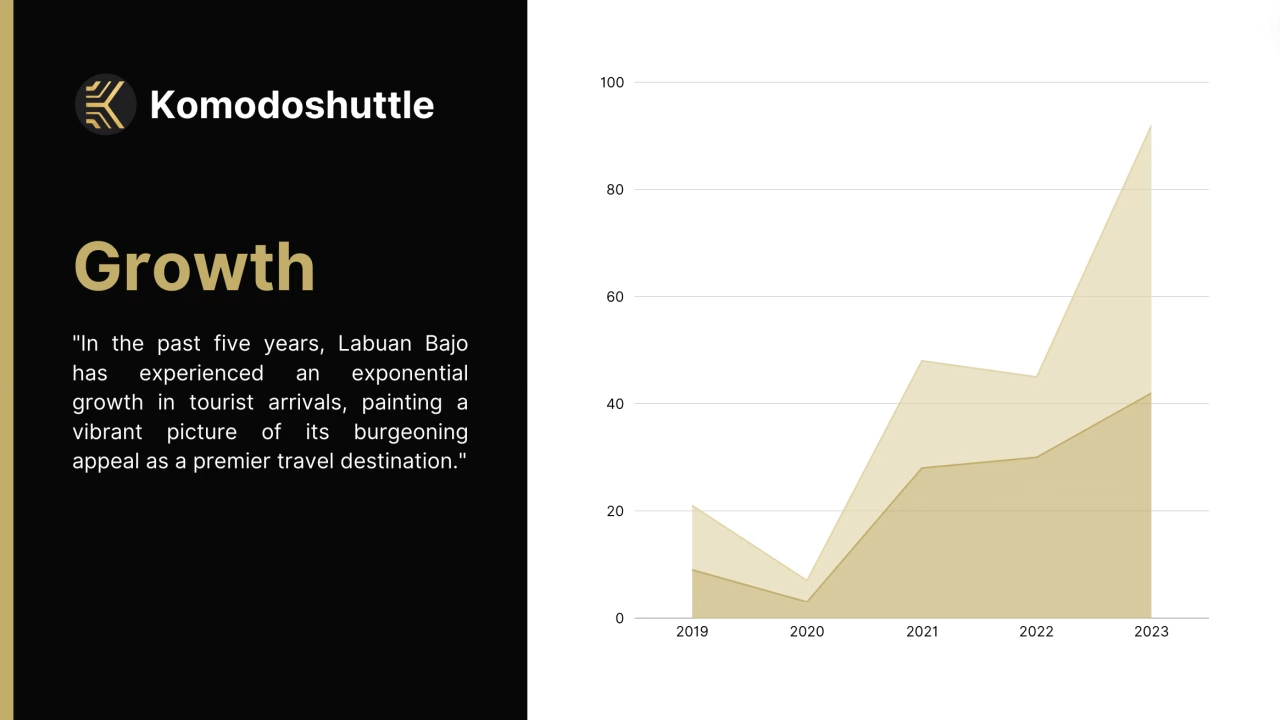
The car rental business opportunity, in line with Labuan Bajo’s growth as a leading tourist destination, has had a significant positive impact on KomodoShuttle’s growth. With the increasing number of tourists and sustained infrastructure investment, demand for car rental services has risen, driving KomodoShuttle to expand and enhance its services, reflected in a 19% revenue growth from 2022 to 2023.
Global Data

Data on revenue and expenditure in the car rental industry shows that this market is experiencing significant growth. Here are some key points:
Market Size: In 2022, the global market size for the car rental industry was estimated at around USD 122.3 billion, and is projected to reach USD 245.1 billion by 2032, with a compound annual growth rate (CAGR) of 7.4% (Global Market Insights Inc.).
Revenue and Market Segments: The largest revenue comes from the short-term rental segment, which accounted for more than 72% of the market share in 2022. Economy cars are the most popular choice in the vehicle type category, holding around 34% of the market share (Global Market Insights Inc.) (Grand View Research).
Geographic Breakdown: The largest car rental market is in North America, which accounted for more than 37.5% of the market share in 2022. Growth in this region is driven by well-developed infrastructure and a high volume of business and leisure travel (Grand View Research) (Econ Market Research).
Trends and Challenges: This sector faces challenges from ride-sharing services and government initiatives to promote public transportation. However, the rise of flexible mobility solutions and growing demand for airport car rental services continue to drive growth (Global Market Insights Inc.) (Grand View Research).
Impact of COVID-19: The COVID-19 pandemic negatively affected this industry, with a drastic decline in rental bookings due to travel restrictions and lockdowns. However, demand has rebounded as the tourism and travel industries recover (Global Market Insights Inc.).
Opportunities in Indonesia
The development of the car rental industry in Indonesia has shown a positive trend in recent years. This growth is driven by various factors, including the growth of the tourism sector and government initiatives to improve infrastructure and tourist facilities.
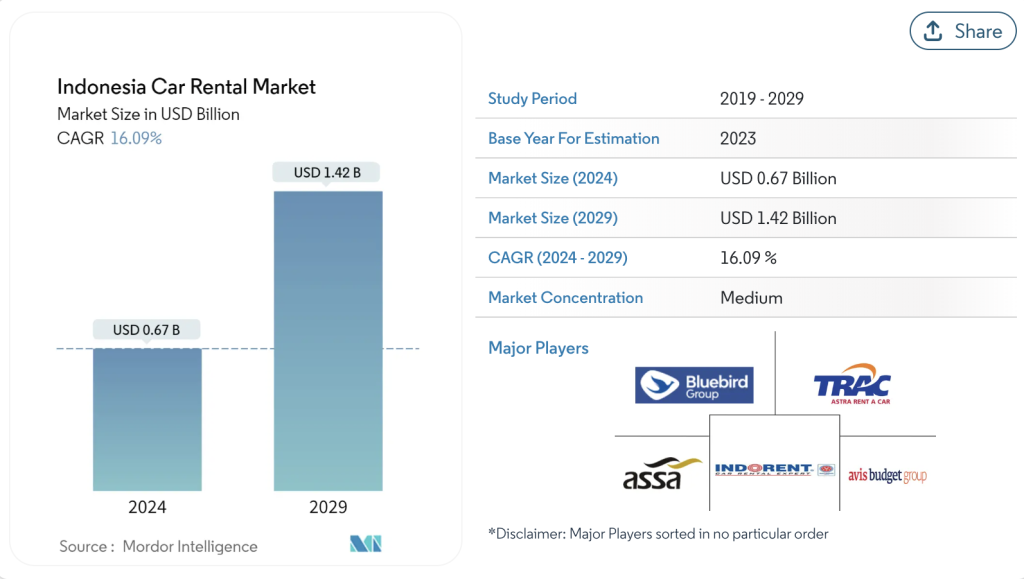
Market Growth: The car rental market in Indonesia is expected to continue growing significantly. In 2024, the market size is projected to reach USD 0.67 billion, and is estimated to grow to USD 1.42 billion by 2029, with a CAGR of 16.09% (Mordor Intelligence).
Government Support: The Indonesian government, through the Ministry of Tourism and Creative Economy, has invested in sustainable and community-based tourism. This is expected to increase demand for car rental services, particularly in priority tourist destinations and sustainable tourism projects (Mordor Intelligence).
Strategic Partnerships: Several key players in this industry, such as TRAC – Astra Rent A Car, Adi Sarana Armada Tbk, and Indorent, have formed strategic partnerships with other companies to expand their automotive ecosystem in Indonesia. For example, MPMX and CARRO have established a partnership to offer an integrated online and offline automotive ecosystem (Mordor Intelligence).
Challenges and Optimism: Despite challenges such as intense competition and the impact of the COVID-19 pandemic, optimism toward the Indonesian automotive market remains high. In 2023, car sales in Indonesia showed recovery and growth, although they did not fully reach the established sales targets (Oto).
Overall, the car rental industry in Indonesia continues to show significant growth potential, supported by government backing and strong strategic partnerships among key players in this market.
KomodoShuttle's Growth
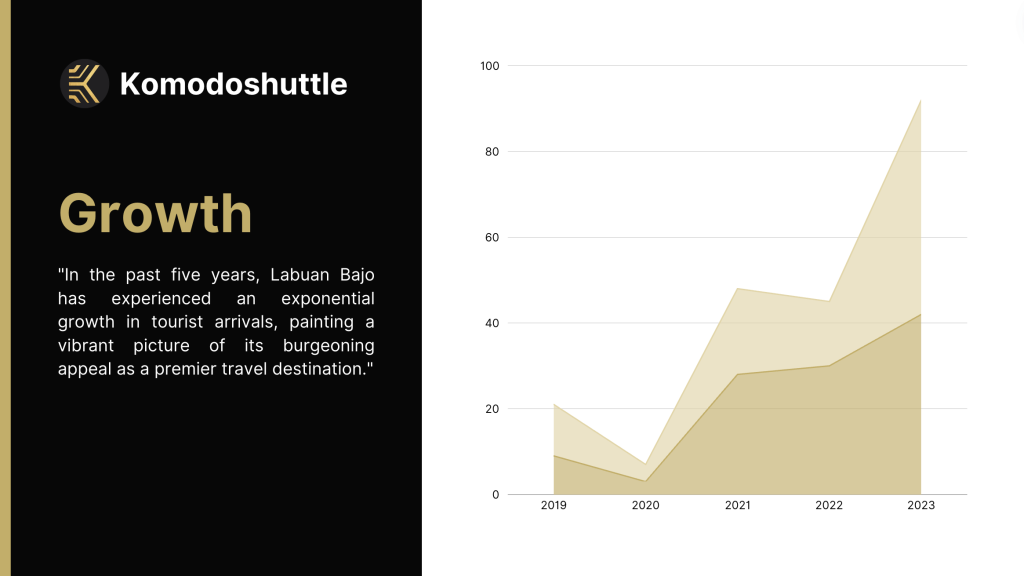
Increased Demand: The growth in tourists directly boosts demand for car rental services. With more tourists visiting Labuan Bajo, KomodoShuttle has seen an increase in the number of customers, reflected in a 19% revenue growth from 2022 to 2023.
Service Expansion: To meet the growing demand, KomodoShuttle may need to expand its fleet and increase the variety of services offered, such as adding larger or more luxurious vehicles to serve different tourist market segments.
Revenue Growth: With the increasing number of tourists and demand for transportation services, KomodoShuttle’s revenue has also grown. This 19% growth reflects the company’s success in capitalizing on opportunities in the expanding market.
Partnerships and Collaborations: Labuan Bajo’s growth also encourages companies like KomodoShuttle to form partnerships with travel agents, hotels, and local tour operators to offer integrated tour packages, which can increase their visibility and market reach.